
I drove rideshare for about four years before my legs started telling me I had a problem. Not a pulled muscle, not a cramp, just this steady, low-grade swelling that started somewhere around hour six and got worse from there. By the time I pulled into the driveway at night, my ankles looked like I had stuffed them with wet sand. I'd kick my shoes off and my wife would give me that look, the one that said she'd been watching this get worse for months.
I figured it was just what happened when you sat all day. Every driver I knew had some version of the same complaint. Swollen feet, aching calves, that heavy-leg feeling that made it hard to even want to walk to the mailbox once you got home. I tried elevating my feet on a cooler I kept in the back seat. I tried switching shoes. I tried walking around more at red lights, which mostly just annoyed the passengers. Nothing moved the needle.
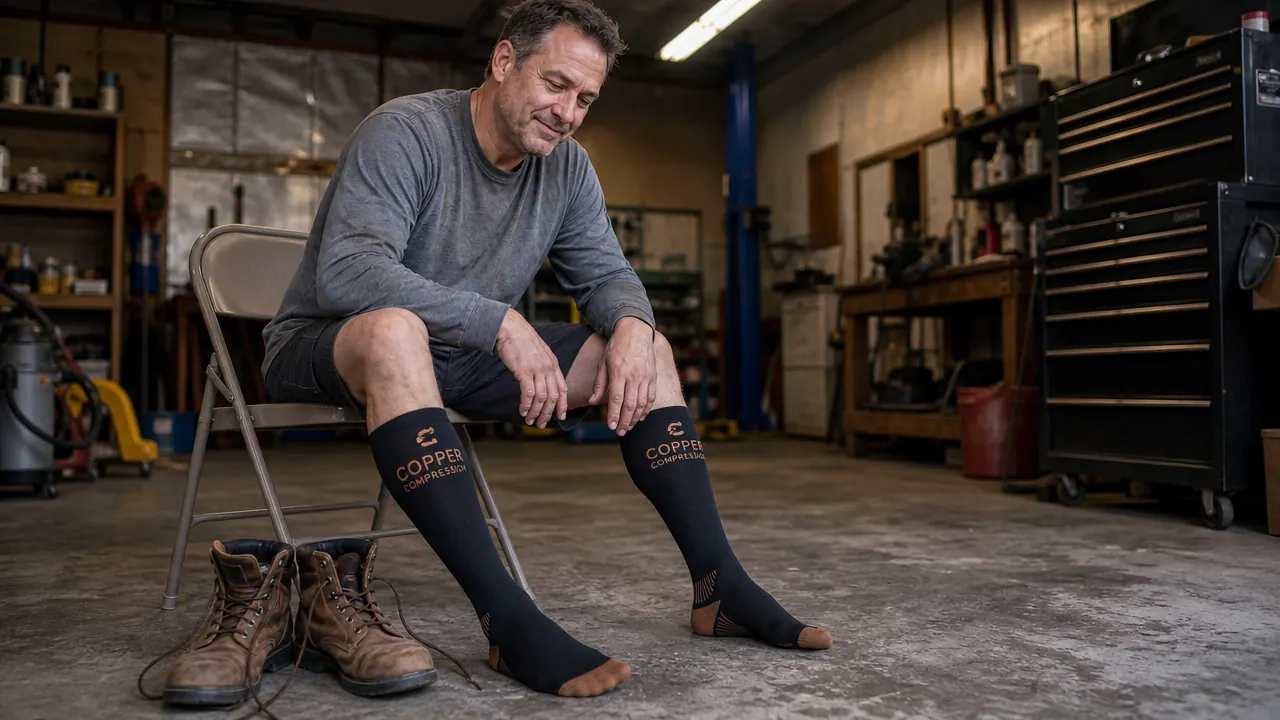
A buddy of mine, Ray, drove long-haul for twenty years before switching to local delivery. He mentioned one afternoon that he'd been wearing compression socks for about six months. I'd always thought those were for hospital patients or old ladies after surgery. He laughed and told me that's exactly what he'd thought too, until the circulation specialist told him his varicose veins were heading somewhere he did not want them to go. That was enough for me to at least look into it.
I picked up a six-pack of the Copper Compression Socks after reading through enough reviews to feel like I understood what I was getting into. The idea behind them is pretty simple: graduated compression, meaning they squeeze tightest at the ankle and ease up as they go toward the knee, which helps push blood back up toward the heart instead of letting it pool in your feet and lower legs while you're sitting. The copper-infused fabric is supposed to help with odor and has some antimicrobial properties, which matters when you're on hour ten and not getting a sock change any time soon.
By the end of week one, I was getting home and my ankles looked like ankles again instead of something that needed draining.
The first morning I wore them, I noticed the snugness right away. Not painful, just present. Like your legs know something is different. By about hour four I realized I wasn't doing my usual fidget-and-stretch routine at every stoplight. My calves felt less loaded. I wouldn't say I felt great, but I felt noticeably less bad than I normally did at that point in a shift. By the end of week one, I was getting home and my ankles looked like ankles again instead of something that needed draining. My wife noticed before I even pointed it out.
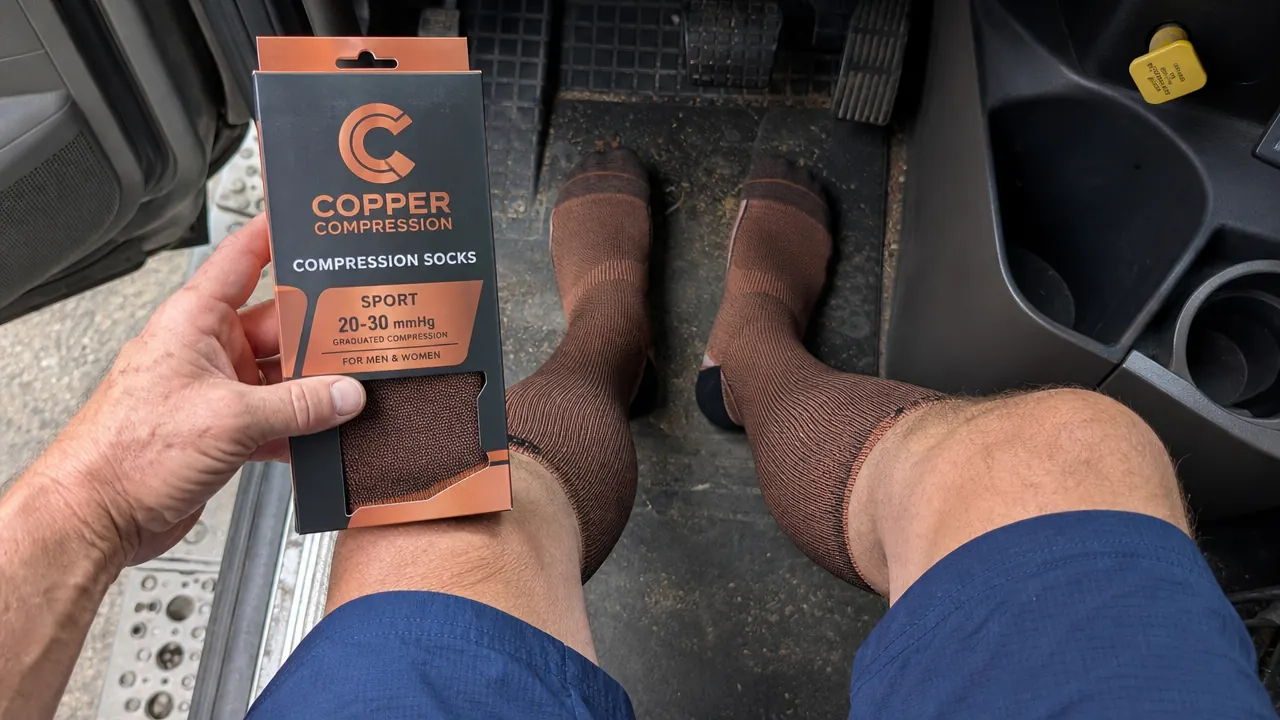
A few things worth being honest about. These socks are not a fix for everything. If your job is wrecking your body in multiple directions, a sock is only going to address one piece of that. I still come home tired. My lower back still gets tight on the long days. But the leg swelling, that specific misery of ballooning ankles and heavy calves, that is genuinely better. And it's better consistently, not just on the easy days.
They wash well. I've run them through the machine probably forty or fifty times at this point and they haven't gone slack or started falling down during a shift. The six-pair count means I rotate through them without having to think about it. I keep two pairs in the car, two in the laundry rotation, two in the drawer. That's the right way to run them.
Your legs are swelling because blood isn't moving. These socks are built to fix that.
Copper Compression Socks come in a six-pair pack, fit men and women, and are built for the exact situation you're in: sitting all day, on your feet all day, or both. Over 47,000 reviews from nurses, drivers, and warehouse workers.
Amazon Check Today's Price on Amazon →The one complaint I have is sizing. The fit runs a little generous, so if you're between sizes, go down. I went with the recommended size based on my shoe size and they were slightly loose through the arch for the first week until they settled in. Not a dealbreaker, but worth knowing before you order.

I've talked to a few other drivers about this since. One guy at a truck stop outside of Murfreesboro told me he'd been wearing compression socks for three years after his doctor mentioned early-stage venous insufficiency. He pointed at his legs and said he hadn't had a complaint since he made them part of his routine. Another woman who drives a delivery van locally said she started wearing them during her pregnancy and never stopped because the relief was that good. Different people, same answer.
If you're the type who pushes through the swelling and figures it's just part of doing your job, I get that. I did it for years. But there's a difference between accepting discomfort that's unavoidable and putting up with something that's actually fixable. The swelling was fixable. I just didn't know it yet.
What I'd Tell You If We Were Sitting at My Kitchen Table
Here's the honest version. Swollen legs at the end of a long shift are not just annoying. They are your body telling you that circulation has slowed down enough to cause problems, and if you ignore it long enough, it goes somewhere you don't want it to go. Varicose veins. Deep vein issues. Stuff that's a lot harder to fix than putting on a sock in the morning. I'm not a doctor, and you should talk to yours if the swelling is severe or new. But for the garden-variety sit-in-a-seat-all-day puffy-ankle problem that a lot of drivers and nurses and warehouse folks deal with every single day, compression socks are the cheapest and most effective thing I've found. The Copper Compression ones specifically held up better than the two cheaper pairs I tried first and I haven't had any reason to shop around since. Put them on before your shift, not after. That's the most common mistake. Once the swelling is already there, you're fighting uphill. Get them on first thing, let them do their job while you do yours, and see how your legs feel at the end of the day. That's all I've got.
Put them on before your shift. One week is all it takes to know.
Copper Compression Socks, six pairs. Graduated compression, copper-infused fabric, fits men and women. If your legs feel like lead at the end of every workday, this is the first thing I'd try.
Amazon Check Today's Price on Amazon →