

I used to set two alarms every night. One for my actual wake-up time and one I called the cramp alarm, meaning I knew something in my left calf or right quad was going to fire like a mousetrap between midnight and 3 a.m. and wake me up anyway. Twenty-two years of long-haul, mostly Midwest-to-East corridors, 10 to 12 hours a day buckled into a seat. By the time I hit 51, nighttime leg cramps were just part of the job, like fuel receipts and weigh stations. I had tried stretching, more water, bananas, an electrolyte powder that tasted like a swimming pool. Some of it helped a little. None of it stopped the cramps. Then in October 2025 I picked up a bottle of BioEmblem Triple Magnesium Complex 300mg and started taking it every night before bed. I have now been on it for three full months without a break. This review covers what changed, when it changed, and where I still see limits.
Quick note before we go further: I am not a doctor and nothing here is medical advice. If you have kidney issues, take blood pressure medication, or are on any prescription drugs, talk to your doctor before adding a magnesium supplement. That is not a disclaimer I am burying in fine print. It is real. Magnesium interacts with certain meds and kidneys regulate how you clear it, so the check matters.
The Quick Verdict
Solid long-term cramp and sleep supplement for shift workers. The triple-form blend absorbs better than oxide-only pills, results build over weeks not days, and the stomach tolerance is the best I have found in this category.
Amazon Check Today's Price →Still waking up at 2 a.m. with a locked-up calf? This is the one I stuck with.
BioEmblem Triple Magnesium Complex 300mg uses glycinate, malate, and citrate together. Over 31,000 reviews. Check the current price and stock on Amazon.
Amazon Check Today's Price on Amazon →How I Have Used It Over Three Months
My routine is simple. Two capsules, 300mg total, taken with a small glass of water about 20 to 30 minutes before I climb into the bunk. On home nights I do the same at my kitchen table before bed. I did not change my hydration habits, my diet, or add any other new supplement during this window, because I wanted to know if the magnesium alone was moving the needle. I tracked cramp incidents in the notes app on my phone. Week one: six cramp events. Week two: four. By week three I was down to two. Weeks five and six, I had one cramp each week. From week seven onward through the full three months, I averaged about half a cramp per week, meaning some weeks were clean and occasionally one would catch me, usually on a week when I was off routine or had pushed really long hours.
I want to be clear about the timeline because the marketing on supplements always makes it sound like week one is a miracle. It was not. The first two weeks I was not sure anything was happening. The change was gradual and I almost quit at the two-week mark. The real shift came between weeks three and four. If you are the type to try something for ten days and declare it does not work, this category of supplement is going to frustrate you. The payoff is in consistency, not speed.
I also noticed an improvement in how quickly I fall back to sleep when something does wake me up. I am not going to call it a sleep supplement miracle. But I stopped lying awake for 40 minutes after a cramp woke me. That part of the night got quieter, and for a driver who needs functional sleep to be safe on the road, that is not a small thing.

Why the Triple Form Matters: Glycinate, Malate, and Citrate
Most cheap magnesium pills use magnesium oxide. It is the least expensive form to manufacture and has notoriously poor absorption, somewhere around 4 percent bioavailability in some studies. The oxide form also hits your gut hard and can cause loose stools fast. I tried an oxide pill years ago and it just gave me digestive trouble without doing much for the cramps.
BioEmblem uses glycinate, malate, and citrate together. Glycinate is chelated to glycine, which is an amino acid your body recognizes, so absorption is significantly better and it is the gentlest form on the stomach. Malate is bound to malic acid and is commonly associated with muscle energy metabolism. Citrate is well-studied for bioavailability and has been used in clinical research on cramps and restless legs. Running all three forms together means you are covering different absorption pathways and mechanisms rather than relying on a single form to do everything. Whether the specific split BioEmblem uses is optimized is hard for me to verify, but the practical result after 90 days is that my stomach has had zero complaints and the cramps came down significantly.
At 300mg per serving, the product sits right around the Recommended Dietary Allowance for adult males (420mg/day total from all sources including food). For most people working a normal diet, two capsules at night is not going to push you over a ceiling. That said, if you are already eating a magnesium-rich diet heavy in nuts, leafy greens, and legumes, your starting deficit may be smaller than mine was eating road food six days a week.

Performance Over Time: Two Weeks vs Six Weeks vs Twelve Weeks
The two-week mark is where most people quit. I almost did. At two weeks, I was averaging four cramp nights a week down from six, which sounds like progress but did not feel like it in the bunk at 1 a.m. The body takes time to build tissue magnesium stores back up if they have been depleted for years. You are not topping off a tank that empties each day; you are slowly rebuilding a deficit that has been accumulating for a long time.
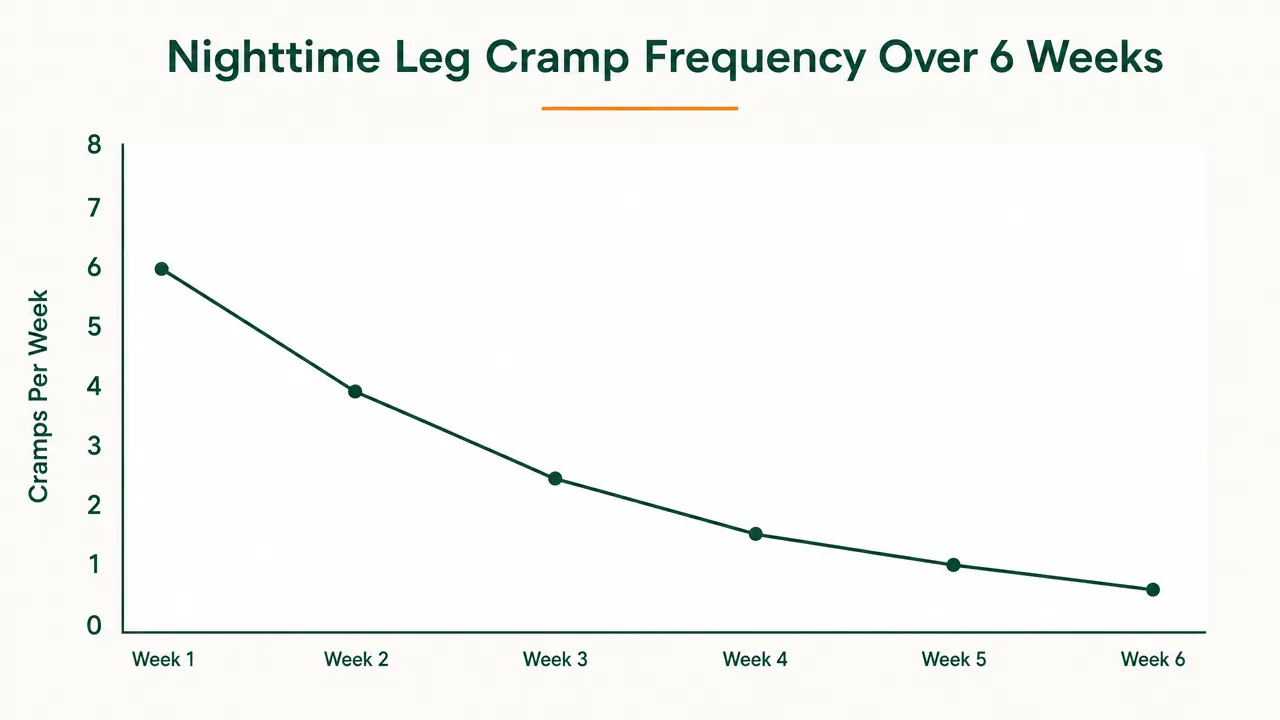
By six weeks the change was real and consistent. I went from six cramp events a week at the start to roughly one per week. My legs still felt restless some nights, that low-grade crawling urge to move that is different from an actual cramp, but even that came down in intensity. By twelve weeks I had settled into what feels like a new baseline. I sleep more deeply, I do not jolt awake most nights, and when I do get a cramp it is shorter and less severe than the full charley horses I was getting before.
I should add that I did not stop other basics during this time. I kept drinking water on route, I kept doing a quick calf stretch before getting in the bunk. Those habits were already in place before October and they had not been enough on their own. The magnesium appears to have been the piece that was missing for me specifically. Your situation may differ.
The first two weeks I almost quit. The change did not feel like anything. By week six, the cramps I was averaging six times a week were down to once. That is not a miracle. That is just what consistency with a real supplement looks like.
Who This Supplement Is For
This supplement makes the most sense for people who sit for long hours in a vehicle or workstation and deal with nighttime leg cramps or restless legs. Long-haul and regional truck drivers are the obvious fit. So are nurses and hospital techs who are on their feet all day and collapse into bed at night still feeling their legs buzzing. Warehouse workers, heavy equipment operators, anyone whose physical labor or prolonged posture has been stripping magnesium through sweat and stress for years.
If you are in your late 30s through 60s and the cramps started somewhere in that window, a magnesium deficiency is one of the more common and underdiagnosed contributing factors in that population. The dietary sources of magnesium, dark leafy greens, pumpkin seeds, black beans, are not exactly abundant in truck stop menus or hospital cafeteria lines. If your diet has been running thin on those foods for a while, you may have a bigger deficit than you think.
Who Should Skip It
Skip this if you have any diagnosed kidney impairment or chronic kidney disease. Kidneys are what regulate magnesium excretion and people with reduced kidney function can accumulate magnesium to a dangerous level. This is not theoretical. If your doctor has flagged your kidney numbers in bloodwork, do not start a magnesium supplement without talking to them first.
Also skip it if you are on certain antibiotics (fluoroquinolones like ciprofloxacin, tetracyclines) or medications for osteoporosis, since magnesium can reduce the absorption of those drugs. People on diuretics or certain heart medications should also check with their prescribing doctor before adding this. Again, not trying to scare you off a solid supplement. Just the honest short list of situations where you need a professional in the loop first.
If you are looking for a supplement that works in the first three days, this is also not your answer. The people who leave one-star reviews on magnesium products almost always tried it for a week. This is a slow-build supplement that works through cumulative tissue restoration, not a fast-acting drug.
The Honest Cons
The price is real. Two capsules a day means a bottle of 90 capsules lasts 45 days. You are looking at roughly two bottles every three months. It adds up. If budget is genuinely tight, a quality magnesium citrate-only supplement is available for less per serving. You lose the triple-form advantage but you are still ahead of oxide-based pills. I stayed with BioEmblem because the stomach tolerance has been perfect and the results came in steady, but I will not pretend the cost is trivial on a trucker's budget.
The capsule size is medium-large. It is not the biggest pill I have swallowed but if you have any difficulty with capsules, take them with a full glass of water. Some people try to dry-swallow them and then complain about a chalky residue in the throat. That is a user issue, not a product issue, but worth mentioning.
And to be completely straight with you: magnesium fixed the cramps. It did not fix my restless legs completely. I still have nights where the legs want to move and will not settle, especially after a hard run through the Appalachians where I tensed everything for eight hours on mountain grades. The restless leg improvement was real but partial, not a clean elimination. For full restless legs syndrome, you need a doctor, not a supplement shelf.
What I Liked
- Triple-form blend (glycinate, malate, citrate) absorbs significantly better than cheap oxide pills
- Stomach-friendly across three months of daily use, no digestive complaints
- Gradual but real reduction in cramp frequency, six per week down to under one per week by week six
- Mild sleep-quality improvement, faster return to sleep after disruption
- Easy two-capsule dose, no measuring or mixing required
- Over 31,000 Amazon reviews with a 4.6 rating, consistent with my own experience
Where It Falls Short
- Results take three to four weeks to build, not days. Short-term testers will quit too early.
- Two bottles every 90 days adds up in cost compared to cheaper single-form magnesium
- Did not fully eliminate restless leg sensation, only reduced cramp severity and frequency
- Larger capsule size can be awkward to swallow dry
- Not appropriate without medical clearance if you have kidney impairment or take interacting medications
How It Compares to the Alternatives I Tried
Before BioEmblem, I tried four other approaches in rough order. An electrolyte powder (sodium, potassium, magnesium oxide blend) helped a little with hydration-related cramps but the magnesium component was oxide-based and low dose, maybe 40mg per serving. A store-brand magnesium oxide 250mg tablet gave me loose stools within two days and I abandoned it. A magnesium citrate powder I mixed in water at bedtime was effective but harder to keep stocked in the cab because it required a shaker cup and spilled on one occasion. And a combination calcium-magnesium tablet a friend recommended just never seemed to move anything for me, possibly because calcium and magnesium compete for the same absorption channels when taken together.
BioEmblem sits at the top of that personal list for a straightforward reason: it is the only one where the stomach tolerance was perfect, the dosing was simple (two capsules, done), and the cramp results held across a full three months. For a driver who lives out of a cab bag and a small shelf in the sleeper berth, simplicity matters. I do not have a supplement drawer back there. Whatever I am taking needs to work and take up minimal space.
If you want to go deeper on the form comparison and specifically whether glycinate or citrate is worth the premium over oxide, I covered that in detail in the companion article on BioEmblem magnesium honest review. And if you want the full case for why shift workers specifically are running low on magnesium in the first place, there is a breakdown in 10 reasons truck drivers need a magnesium supplement.
Three months in, I am still taking two capsules every night before bed. It is the one supplement that earned its spot in my cab bag.
BioEmblem Triple Magnesium Complex 300mg. Glycinate, malate, and citrate in one capsule. 4.6 stars across more than 31,000 reviews. See the current price and availability on Amazon.
Amazon Check Today's Price on Amazon →