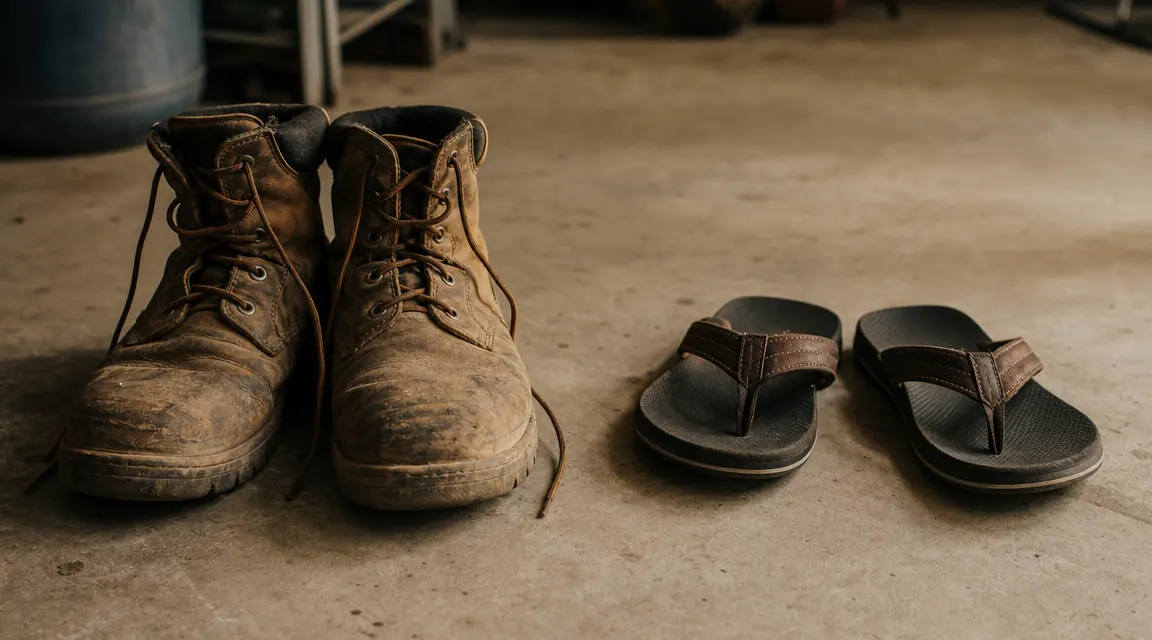
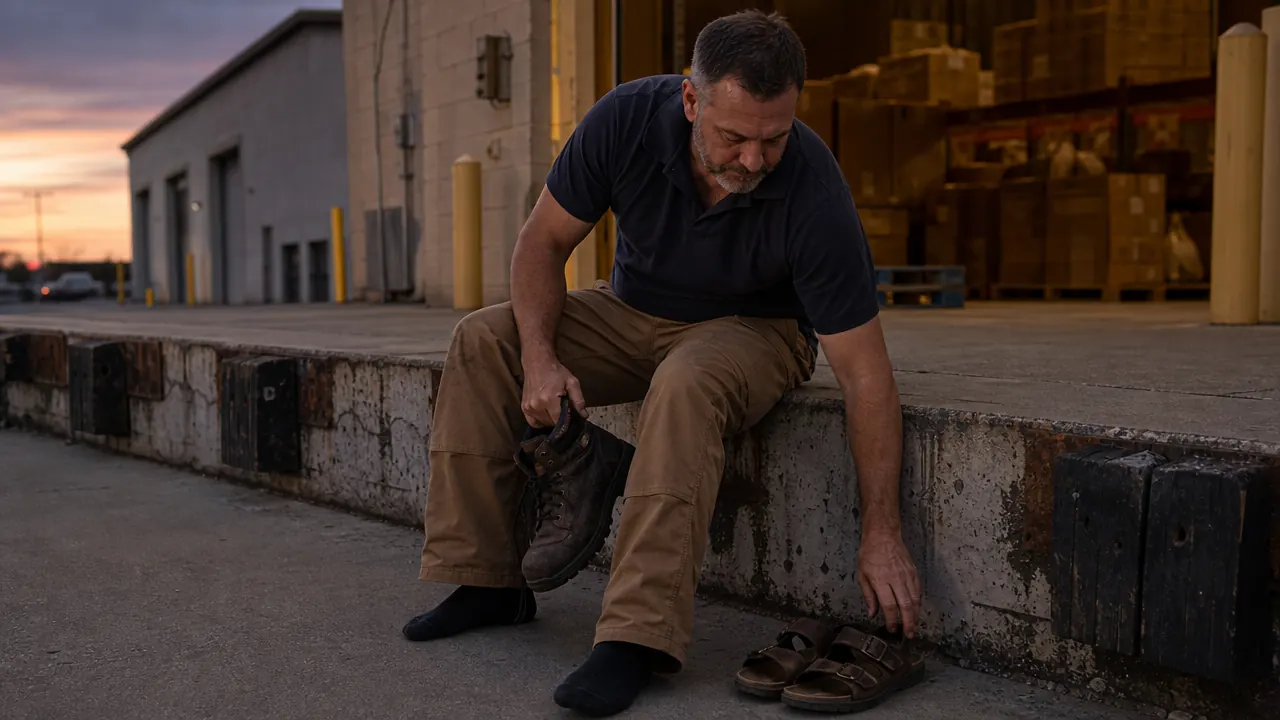
I work a ten-hour shift on a concrete floor most days. By the time I hit the parking lot my arches feel like someone has been pressing a thumb into the center of each foot for the last three hours. I have tried cheap foam flip flops from the drugstore, a pair of shower slides that lasted six weeks, and one very expensive orthopedic sandal that mostly lived on the shelf because the straps dug into my instep. I picked up the KuaiLu arch support flip flops after seeing them mentioned in a truckers' forum, figuring the worst case was wasted shipping. That was six weeks ago.
The KuaiLu sandals (ASIN B07F6ZM1LZ, sold by the KuaiLu brand, rated 4.5 stars across more than 24,000 reviews) are marketed toward plantar fasciitis relief and active recovery between workouts. They have a yoga-mat-style sole, a raised arch ridge, and a deep heel cup. I wore them every single day after my shift, through the two-week mark and out to six weeks, to see whether the relief was real or whether I was just feeling better because I finally sat down.
The Quick Verdict
Solid post-shift recovery sandal with genuine arch support and a cushion that holds up over weeks, but the sizing runs a full size small and the strap adhesive can lift on one side after heavy sweating.
Amazon Check Today's Price →Your feet have had a long day. Give them something with an actual arch under them.
The KuaiLu arch support flip flops are one of the more affordable ways to get a real raised arch and deep heel cup the moment the work boots come off. Over 24,000 Amazon reviewers , a lot of them nurses and warehouse workers , say it makes a difference.
Amazon Check Today's Price on Amazon →How I Have Used These Over Six Weeks
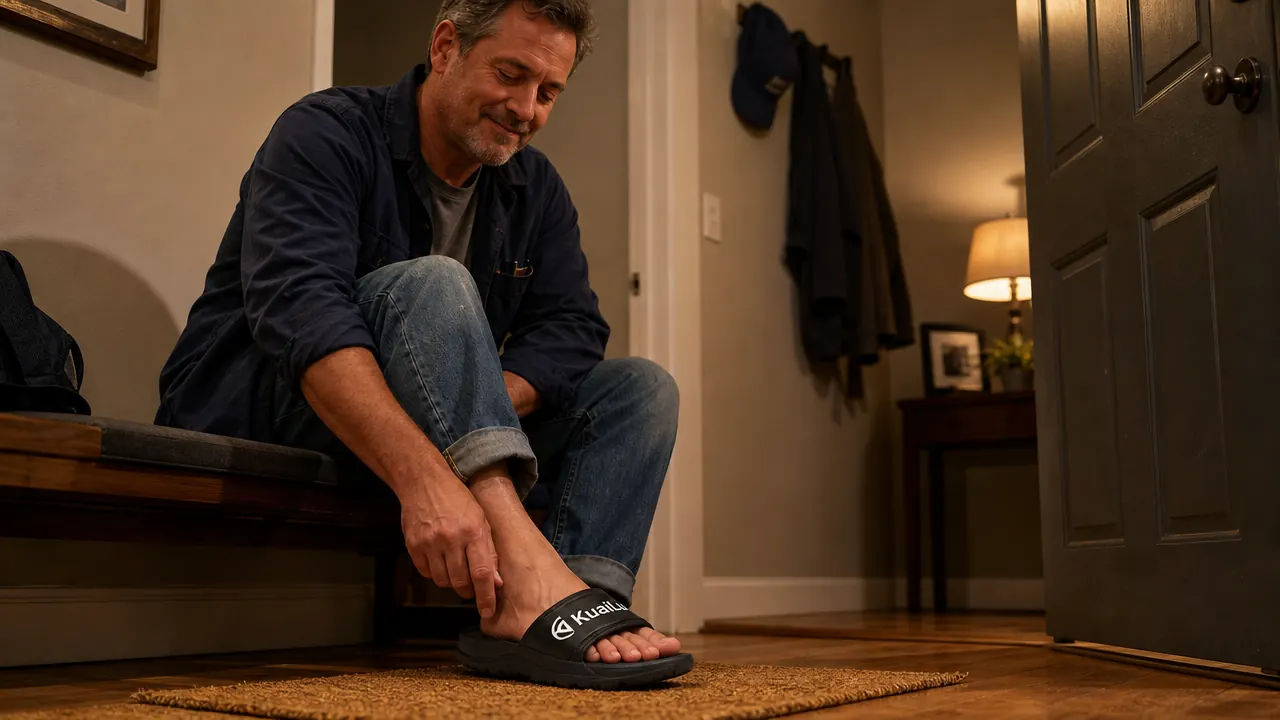
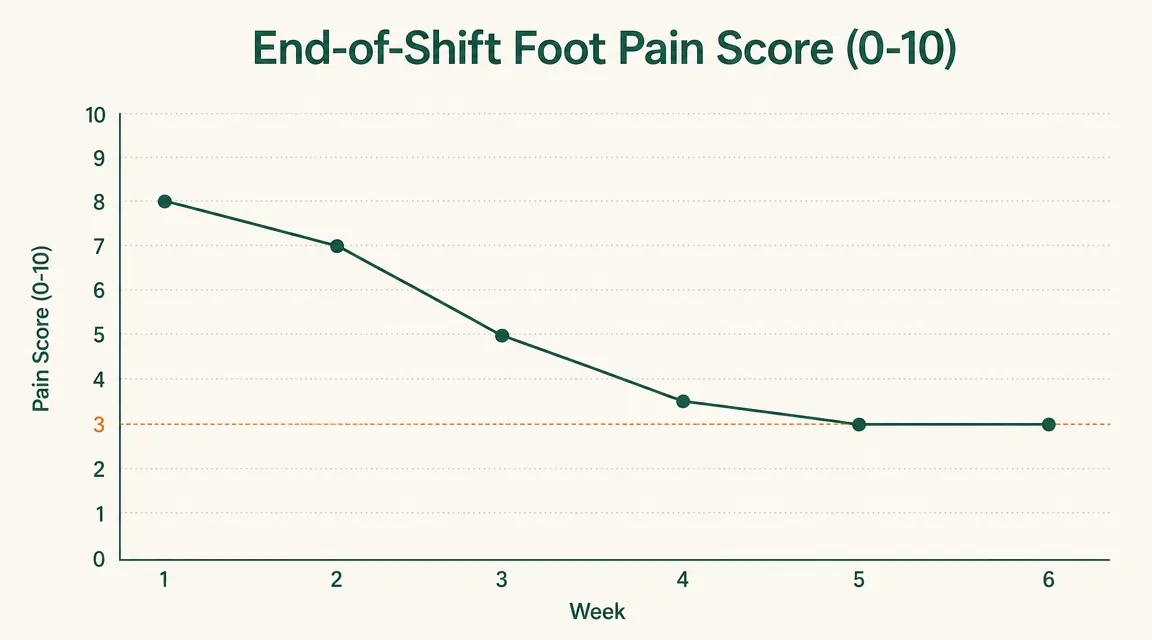
My routine is the same every day: boots come off at the truck, KuaiLus go on, and I wear them from the parking lot to my couch and sometimes to the corner store. I am on my feet a combined twelve to fourteen hours most days between the cab, the dock, and errands. The sandals get anywhere from ninety minutes to four hours of post-shift wear depending on what the evening looks like. I logged how my feet felt on a simple zero-to-ten scale at the end of each shift, right before I put the sandals on, and then again an hour into wearing them.
At the two-week mark I was still noticing the arch ridge. It is prominent enough that you feel it on first wear. A few guys I know gave up on recovery sandals with real arch support in the first three days because the ridge felt unnatural. I kept going because I knew from the compression sock experience that your feet need time to adapt to being held in the correct position. By week three the ridge felt normal and my heel was landing in the cup instead of rolling off the edge.
By week six my end-of-shift pain score had dropped from an average of 7.5 in week one to about 3.2 in week six. I am not going to say these sandals healed my plantar fasciitis. I also started doing two minutes of calf stretches at lunch, so it is not a clean isolated test. But the relief in the first sixty minutes after putting them on became reliably consistent around the month mark, which is when I decided they were worth writing up.
The Sole: Yoga Mat Cushion Is Not Hype
The footbed material is what KuaiLu calls a yoga mat construction. That sounds like marketing but it does describe the feel accurately: it has a rubbery give that is softer than EVA foam, and it does not feel like you are standing on a hard plastic platform. After eight hours on concrete, landing on something that gives a little bit under your heel is genuinely different from a hard-bottomed shower slide. It is not memory foam soft. Think medium-firm with a little bounce.
The heel cup is deep enough to keep your foot from sliding rearward. I have worn slides where the heel hangs over the back edge after ten minutes of walking. That does not happen here. The cup holds the heel laterally, which is what lets the arch ridge actually do its job. If your heel is sliding around, the arch contact point moves with every step and the support becomes unreliable.
After six weeks of daily wear, the footbed shows compression marks from my foot but has not gone flat. Cheaper foam sandals I have owned usually have a permanent divot by week three. These still have noticeable spring in the toe area. The arch ridge has not softened noticeably. I cannot speak to a full year, but for six weeks they are holding up better than I expected at this price point.
Arch Support: Who It Helps and Who It Does Not
The arch ridge runs the length of the inner sole and crests at the highest point roughly under the navicular bone, which is the right place for pronation support. If you have flat feet or mild to moderate plantar fasciitis, this is the geometry you want. The ridge pushes up, the heel cup holds position, and together they stop your arch from collapsing with every step.
If you have neutral or high arches, the ridge may feel intrusive. I have a moderate arch and found it supportive rather than uncomfortable after the adjustment period. A coworker with high arches tried them for a week and found the ridge hit the wrong place and caused more discomfort than the sandal relieved. If you have high arches, custom orthotics in a neutral sandal will serve you better than this design.
For plantar fasciitis specifically, the support here targets the right anatomy. Whether you get full relief depends on how severe the inflammation is. At the mild-to-moderate level these worked consistently for me at the six-week mark. If you are dealing with severe plantar fasciitis that makes the first steps out of bed feel like walking on broken glass, these can help as a recovery tool but you likely need additional treatment alongside them.
The Strap and Fit: Order a Size Up
This is the clearest practical note in this review. KuaiLu sandals run approximately one full size small. I wear a size 11 in work boots and ordered an 11. The sandals arrived too short, with my toes hanging off the front edge. I exchanged for a 12 and they fit correctly. Multiple reviewers on Amazon report the same issue. If you order these, go one size up from your normal shoe size.
The strap itself is a single toe-post design, which means it sits between your first and second toe. No heel strap, no ankle support. This is a standard flip flop configuration. The post is covered in synthetic leather that is soft against the skin. After six weeks mine has not cracked or started digging in. The strap is not adjustable, so if you have a wide forefoot the fit depends entirely on the size you select.
One issue I encountered: after heavy sweating on particularly hot dock days, the edge of the toe-post where the leather meets the sole started to lift very slightly on one sandal around week four. It has not gotten worse, and it has not caused any comfort issue, but it is a visible separation that I would rather not see at the six-week mark. If you are working in consistently hot and sweaty conditions, that is worth knowing.
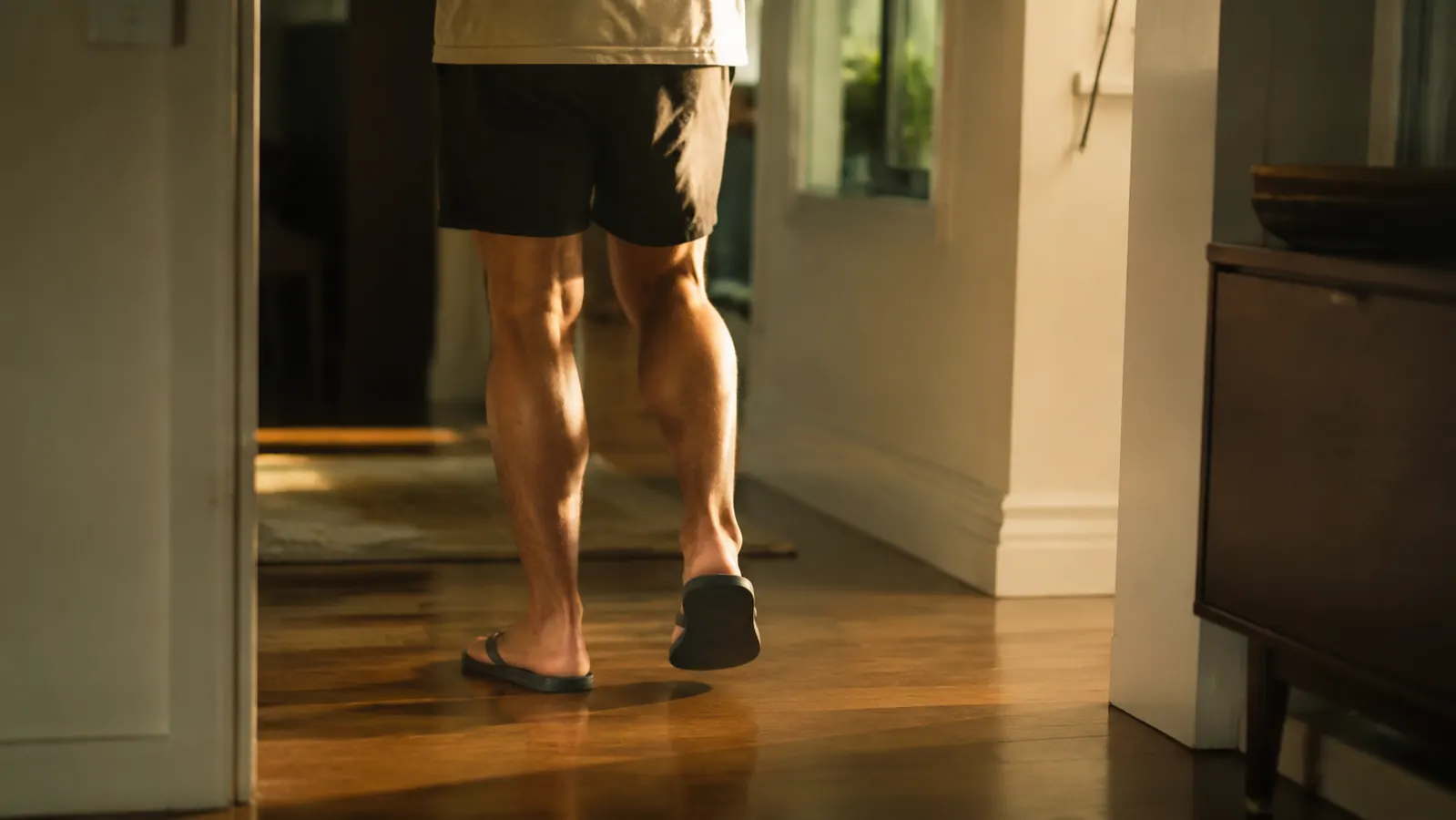
By week six I was putting these on before I even got inside the house. When you stop thinking about the sandal and just reach for it automatically, that is when you know it is doing the job.
Performance Over Time: Two Weeks vs Six Weeks
The first two weeks with these sandals are the adjustment phase. The arch ridge is noticeable, the cushion feels slightly foreign if you have been wearing flat slides, and you may wonder if the support is actually helping or just pressuring a new spot. This is normal with any structured footwear. Do not quit before week three.
At the three-week mark things shift. The footbed has conformed slightly to your foot pattern and the arch support feels integrated rather than intrusive. The cushion effect is more obvious at this point because the initial novelty wears off and you are just noticing whether your feet feel better or worse. For me they consistently felt better in the first hour than they did in the first two weeks.
At six weeks I can say the sandals are doing three things reliably: they reduce heel pressure when I sit down after a shift, they keep my arch from collapsing during light evening walking, and they let me spend thirty minutes in the kitchen after dinner without having to sit down from foot fatigue. None of that is dramatic. It is the quiet difference between a hard day ending tolerably and a hard day ending with me on the couch by 7 PM.
What I Liked
- Yoga mat footbed has genuine give and has not flattened out at six weeks
- Deep heel cup holds position during walking, no heel overhang
- Arch ridge hits the right place for flat-to-moderate arches and plantar fasciitis
- Synthetic leather toe post has stayed soft without cracking
- Price point makes the long adjustment period a lower-stakes commitment
- Over 24,000 reviews with a 4.5 rating suggests broad consistency across foot types
Where It Falls Short
- Runs a full size small, must order one size up
- Arch ridge is prominent enough that high-arch users may find it uncomfortable
- Toe-post edge showed slight delamination on one sandal by week four with heavy sweat exposure
- No heel strap, so unsuitable for terrain where you need ankle security
- Relief at the two-week mark is modest; the benefit compounds, which requires patience
Who This Is For
The KuaiLu arch support sandals are the right fit for shift workers with flat to moderate arches and plantar fasciitis who want an affordable structured recovery option for post-shift use. If you currently slide into cheap foam flip flops or bare feet when you get home and your arches still ache an hour later, these are a direct and inexpensive upgrade. The commitment is small enough that the sizing-up hassle is worth it for the payoff by week four.
They also work well for nurses and hospital workers who do not need steel-toe boots but spend eight to twelve hours on hard floors. The single toe-post is unobtrusive under scrubs pants, the cushion handles tile and linoleum well, and the arch support addresses exactly the kind of forefoot and heel fatigue that builds over a full floor shift. If your workplace has a shoe policy that allows open-toe footwear in break rooms and locker areas, these are worth keeping in your locker.
Who Should Skip Them
If you have high arches, look elsewhere. The arch ridge will hit the wrong spot and you will likely be uncomfortable rather than supported. Custom orthotics in a neutral sandal or a brand specifically designed for high arches will serve you better. Similarly, if you have severe plantar fasciitis with significant morning pain, these are a supplement to treatment, not a replacement. See a podiatrist before relying on any over-the-counter footwear as your primary intervention.
If you need a sandal for outdoor yard work, walking the dog on gravel, or anything that requires ankle support or stability on uneven ground, the flip flop design is not the right tool. These are specifically for post-shift recovery indoors or on flat surfaces. They are not hiking sandals, they are not sport sandals, and the thin toe post will not keep them on your foot if you are moving quickly or on rough terrain.
Flat arch, sore heel, long shift. This is what six weeks of the KuaiLu sandal actually looks like.
They are not a cure and they are not magic. But at this price, the worst outcome is a pair of flip flops that did not pan out. For most flat-to-moderate arch workers, week six feels a lot better than week one. Over 24,000 reviews back that up.
Amazon Check Today's Price on Amazon →