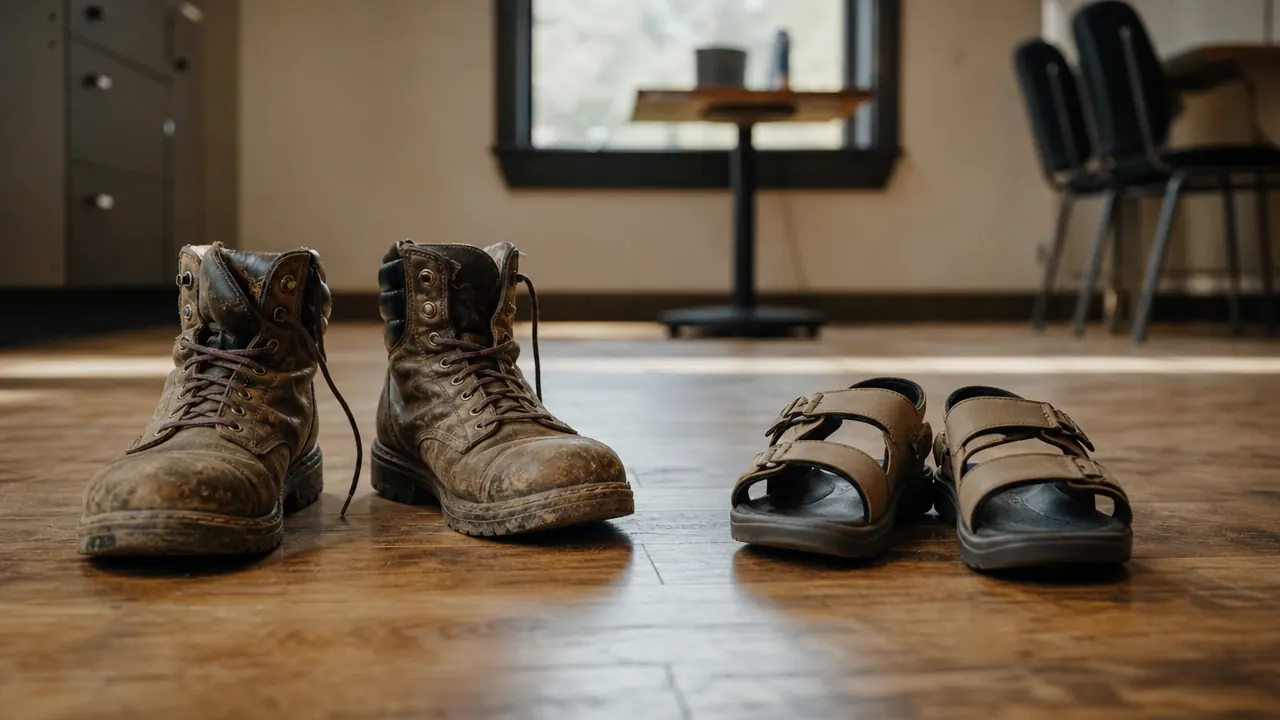
I have spent a lot of time trying to fix sore feet the cheap way. I tried gel insoles from the pharmacy rack. I tried moleskin pads, arch taping, and one memorable $90 pair of custom orthotics that cracked in half inside my boot after four months. The short answer most working folks need is this: if your feet hurt after the shift, not during it, a dedicated recovery sandal beats an insole every single time. If your feet hurt during the shift, inside your work boot, a quality orthopedic insole is the right tool. The two solve different parts of the same problem, and mixing them up costs you time and money.
This comparison is specifically for workers who sit, drive, or stand for long stretches: truck and delivery drivers, nurses, warehouse staff, and trades. The KuaiLu Arch Support Sandals are the left column here, sitting at a 4.5-star rating across more than 24,000 reviews. On the right is the concept of an orthopedic insole inside your work boot, which covers everything from $15 pharmacy versions to $60 brand-name options like Superfeet. No Amazon link on the right side because there are dozens of insole options and none of them have consistently outperformed the sandal for post-shift recovery in this niche.
| KuaiLu Recovery Sandals | Orthopedic Insoles in Work Boots | |
|---|---|---|
| When you wear it | Off the clock, immediately after removing work boots | During the shift, inside the boot you already own |
| Arch support | Built-in contoured arch ridge, fixed position, always engaged | Depends on insole brand; removable, can shift or compress over time |
| Off-the-clock recovery | Open toe box, zero constriction, foot decompresses fully | Not applicable; insoles stay inside the boot and are useless once the boot is off |
| Fits in work boots | No, sandal only, not worn inside other footwear | Yes, transfers across multiple pairs if they share the same size |
| Cost over time | One-time purchase; yoga-mat sole holds up for 12 to 18 months of daily evening wear | Replacement every 3 to 6 months recommended; adds up if you buy quality brands |
| Cushioning | Thick yoga-mat EVA foam base absorbs impact; noticeably springy underfoot | Varies widely; thin pharmacy insoles compress flat in weeks; premium versions hold longer |
| Best for | Post-shift foot recovery, plantar fasciitis pain in the evening and morning, anyone who does not need arch support inside the boot itself | Workers whose boots have zero arch support and who feel pain during the shift, not just after |
| Downside | Not waterproof for outdoor use; leather upper can scuff; sizing runs half a size small | Does not help once the boot is off; thick insoles can make snug boots feel cramped; quality varies dramatically by brand |
Where the KuaiLu Recovery Sandals Win
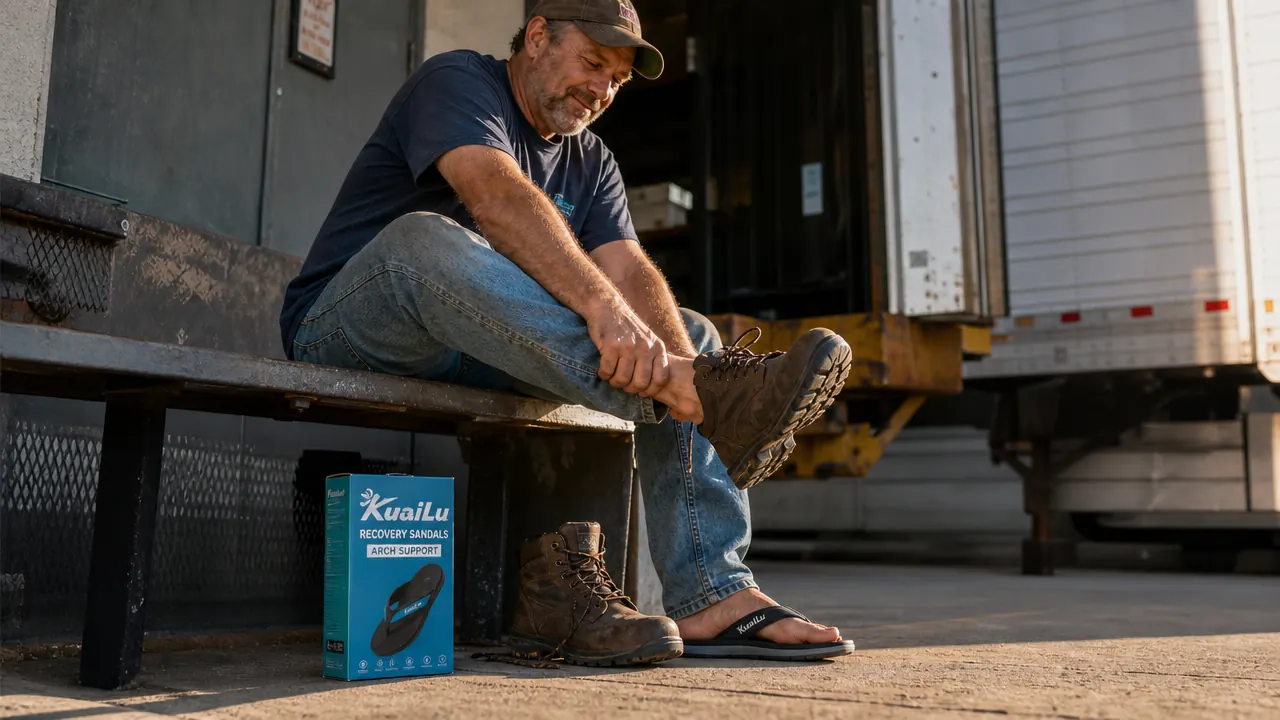
The biggest advantage of a dedicated recovery sandal is that it works the moment you take your boots off, which is exactly when your feet need help most. After ten hours in a steel-toed boot, the plantar fascia is contracted, the heel pad is compressed, and the toes have been bunched together since 6 a.m. Sliding into a sandal with a built-in arch contour and a thick EVA yoga-mat sole lets everything decompress without going completely flat. Flat is the problem. Walking around barefoot on a hard kitchen floor after a long shift can actually make plantar fasciitis worse, because there is no arch support catching the fascia as it lengthens.
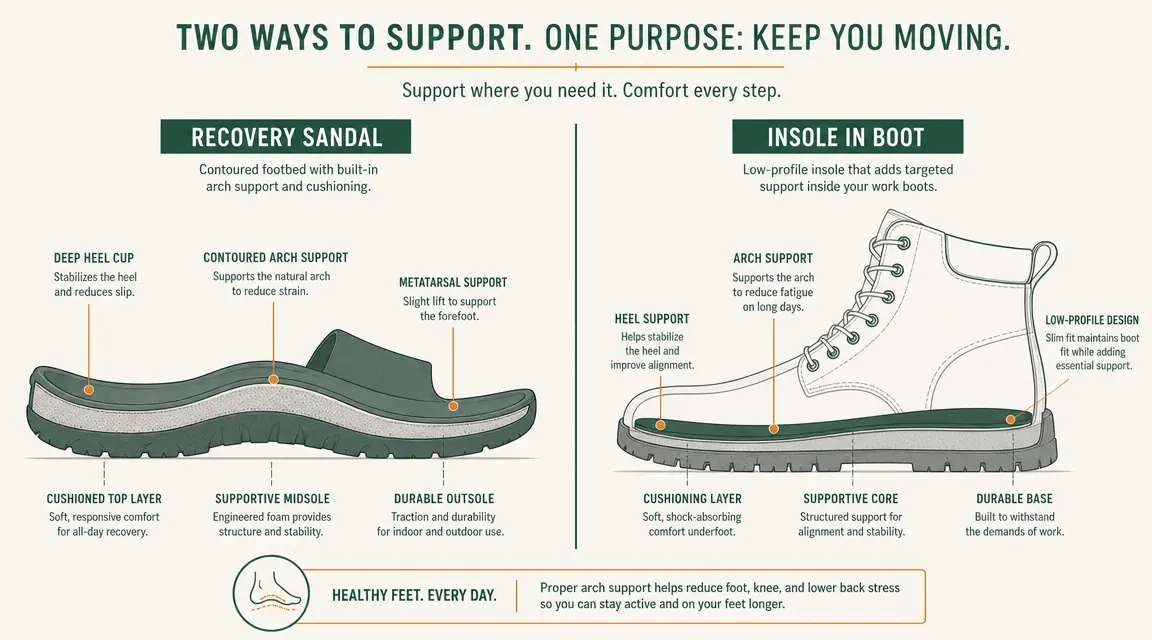
KuaiLu specifically designed the footbed with a raised arch ridge and a deep heel cup, which cradles the calcaneus and prevents the rolling inward that causes most plantar fascia strain. The yoga-mat material is softer than a standard rubber flip flop but firmer than the cheap foam ones that give out in a season. The leather upper is a thoughtful touch for workers who want something that does not scream hospital shower sandal when they wear them at a rest stop or around the house. At 4.5 stars from over 24,000 buyers, the comfort-to-price ratio holds up even under scrutiny.
The recovery window matters more than most people give it credit for. The plantar fascia is a band of connective tissue that gets tight and inflamed over a long day of weight-bearing. If you go from a boot directly to a flat floor for the next six hours, it never fully recovers. The sandal is essentially a passive stretch device: the contoured footbed keeps a slight amount of load on the arch in a controlled way, which helps the fascia normalize its length gradually rather than snapping back tight overnight. That is why so many reviewers say they notice the biggest difference first thing in the morning, when the traditional plantar fasciitis sharp-step pain starts to fade after a couple of weeks of consistent evening wear.
Where Orthopedic Insoles Win
If you are a nurse doing 12-hour shifts in clogs with zero arch support, or a warehouse worker whose steel-toed boots came with paper-thin factory liners, an orthopedic insole gives you support during the shift. That is the one thing a recovery sandal cannot do. The sandal is a post-shift tool. If your arches are collapsing at hour four on the floor, you need something inside the boot itself, not waiting for you in the locker.
Premium insoles like Superfeet Green or Powerstep Pinnacle have a rigid or semi-rigid shell that prevents arch collapse under load, which is meaningfully different from the cushioned-only versions at the pharmacy. If your workplace requires steel-toed footwear with a safety rating, you cannot swap the boot for a sandal on the floor anyway. Insoles are also portable: one good pair can move between your work boots and your casual shoes, which gives them value beyond a single use case. The catch is replacement frequency. A hard-use insole that sees 12 hours of standing daily compresses and loses shape in three to six months. Budget for that.
There is also a comfort fit consideration that insole buyers often overlook. If your boots already fit close around the foot, adding a thick orthotic pushes the foot up and can cause the heel to slip or the toes to hit the toe box. This is especially common in narrow steel-toed safety boots with a low volume last. If that is your situation, a thinner, lower-profile insole with a firm arch post will do more for you than a thick cushioned one. Know your boot volume before you order.
Your feet took ten hours of punishment. Give them twenty minutes of real arch support tonight.
The KuaiLu sandals have a built-in contoured arch ridge and a thick yoga-mat sole that most post-shift footwear does not. Over 24,000 reviews at 4.5 stars from people who work on their feet.
Amazon Check Today's Price on Amazon →Who Should Buy Which
Here is the plain version. If your feet hurt at night, after the shift, when you are walking from the parking lot to your front door, or first thing in the morning when you step out of bed, the KuaiLu sandals are the right call. That pattern is classic plantar fasciitis aggravated by a full day on your feet and then no recovery support once the boots come off. A good recovery sandal closes that gap directly.
If your feet hurt during the shift, around hour five or six, with pain centered in the arch or heel while you are still in the boot, start with an insole. You need support under load, not just after. Many workers end up using both: a quality insole inside the boot for daytime support, and the KuaiLu sandal in the evening as a dedicated recovery tool. That combination covers the whole day. The sandal alone is not enough if your boot has no arch support at all. The insole alone does nothing once the boot is off. Together they are a complete system for working feet.
The sandal covers the six hours after your shift. The insole covers the ten hours inside the boot. Most workers who are hurting need both, but if you can only buy one today, match the tool to when your feet hurt most.

One more thing worth saying: sizing on the KuaiLu sandal runs about half a size small, which several reviewers flag. If you are normally an 11, order an 11.5 or go straight to a 12. The leather upper is stiff for the first few days and then softens significantly. Do not judge them in the first hour. Let them break in over three or four evenings and the fit settles into something that feels custom-shaped to your foot, which is the whole point of a contoured footbed.
The leather upper also means these are not a poolside sandal. They handle light moisture fine, but wearing them through puddles or on wet concrete is going to shorten their life. Use them for what they are: an after-shift recovery tool for the house, the break room, the truck stop, or the walk from the rig to the motel door. Keep them dry and they last. Several verified buyers report using the same pair for 18 months of daily evening wear, which makes the price per wear genuinely low.
If you are on the fence, the strongest argument for the KuaiLu sandals over an insole is simplicity of use. You do not have to remember to swap insoles between pairs of shoes. You do not have to trim them to fit. You pull the boots off, slide the sandals on, and your feet start recovering. That is the version of foot care that actually happens after a ten-hour shift when you are tired and just want to sit down. Anything that requires extra steps gets skipped. The sandal is one motion, and it starts working immediately.
One thing neither tool will fix by itself: if you are sleeping on your stomach with your feet pointed down, or if you are rolling out of bed and putting full weight on a cold, contracted plantar fascia first thing in the morning, you are undoing part of the recovery work every night. A quick 30-second calf stretch before you stand up in the morning costs nothing and makes everything else work better. The sandal handles the passive recovery. The stretch handles the active reset. Between those two habits and a decent insole if your boot needs it, most people with shift-related plantar fasciitis see real improvement within two to three weeks.
Recovery sandals built for the worker who needs real arch support, not just foam padding.
KuaiLu arch support flip flops with a yoga-mat sole and built-in heel cup. Rated 4.5 stars by over 24,000 buyers, including plenty of nurses, warehouse workers, and drivers.
Amazon Check Today's Price on Amazon →