
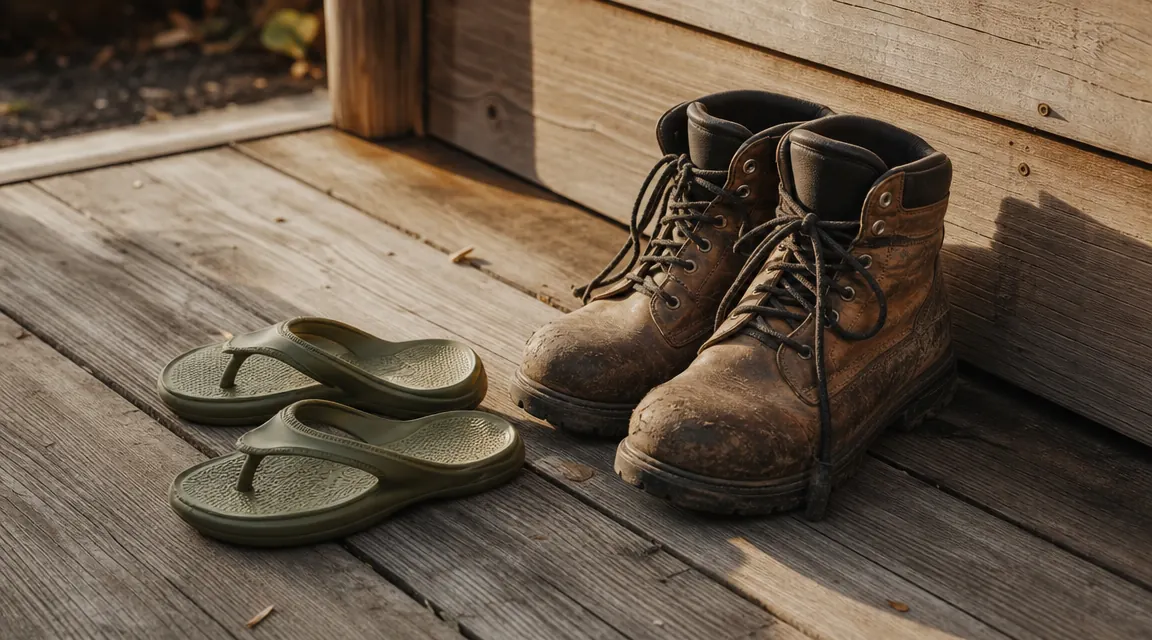
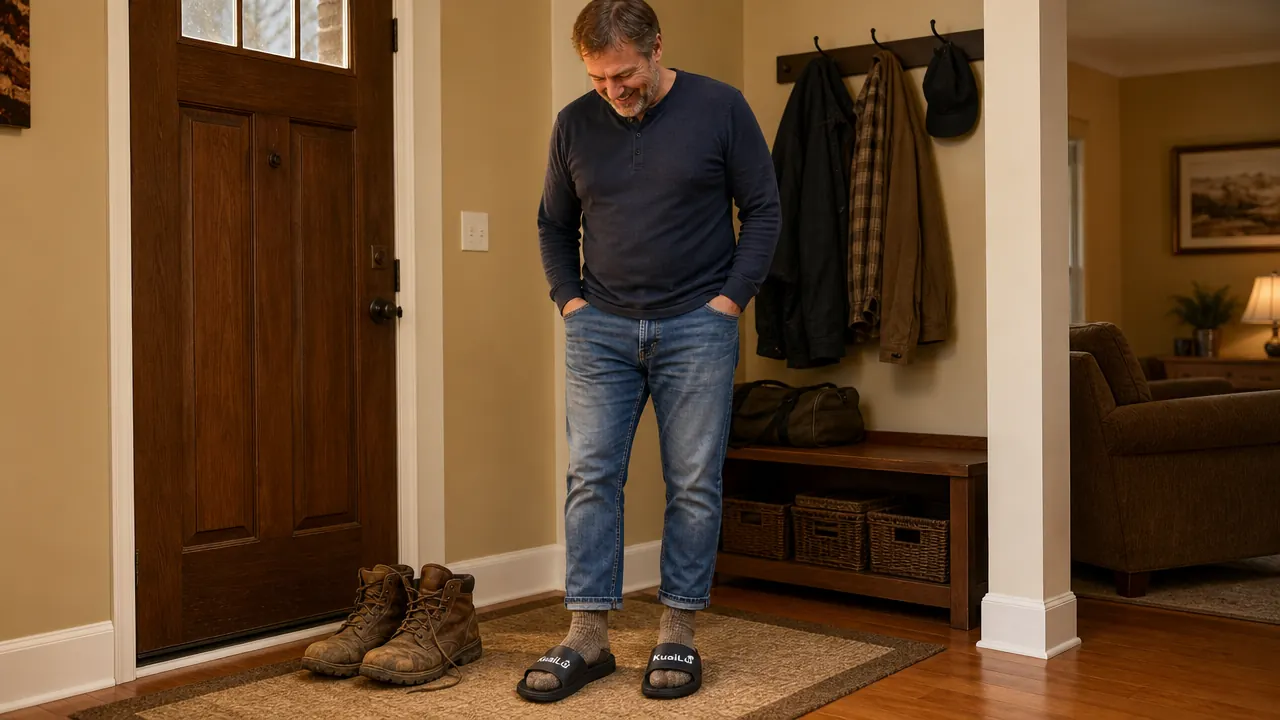
My buddy Dave drives a flatbed and has plantar fasciitis so bad he says the first three steps out of the cab every morning sound like someone crumpling a chip bag. He ordered the KuaiLu flip flops in his usual size 10, the same 10 he wears in his work boots, and they showed up feeling like a size 9. He figured it was a one-off and ordered a size 11. The 11 fit. That is the opening scene for this review, because it is the thing the listing page will not tell you clearly, and it is the thing that sends the most people straight to the return queue.
This is not a review about whether the KuaiLu arch support flip flops work. They do, for a specific kind of foot, in a specific way, and I will get into all of that. This is the review about the details the star average smooths over: the sizing chart that lies, the toe post that punishes you for the first week, the arch contour that feels like heaven if your arch is medium-to-high and feels like a pebble stuck under your foot if it is flat or low, the foam that starts firm and gets softer over a few months, and whether any of this is usable if your feet run wide.
The Quick Verdict
Solid post-shift arch relief for medium-to-high arches on narrow to medium feet, but size up one full size and budget a week for the toe post to stop rubbing.
Amazon Check Today's Price →Your feet are already telling you something is wrong. Check if KuaiLu has your size available right now.
With over 24,000 reviews and a 4.5-star average, these are one of the best-selling recovery sandals in their category. Sizes move fast. Check current availability on Amazon before your size sells out.
Amazon Check Today's Price on Amazon →The Sizing Problem: Order a Full Size Up, Not a Half Size
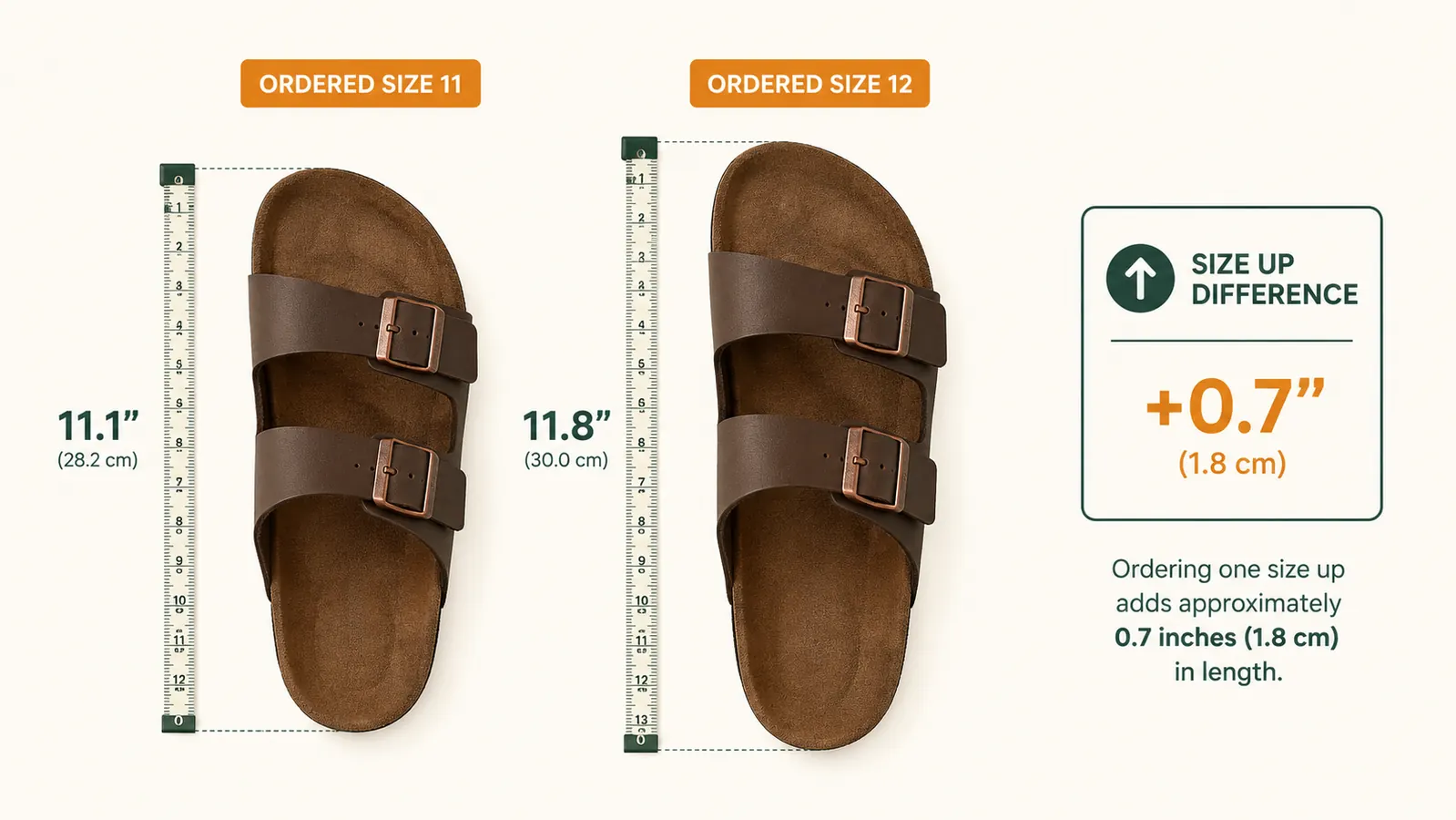
Let me be specific because vague sizing warnings are useless. The KuaiLu footbed runs roughly half a centimeter shorter than what the size chart suggests. In practical terms, a man who is a true size 10 in a running shoe needs to order the size 11 here. A man who is a true 11 needs to order the 12. I have seen people go half a size up and still feel pinched at the toes after a week. The safe move is a full size up, period.
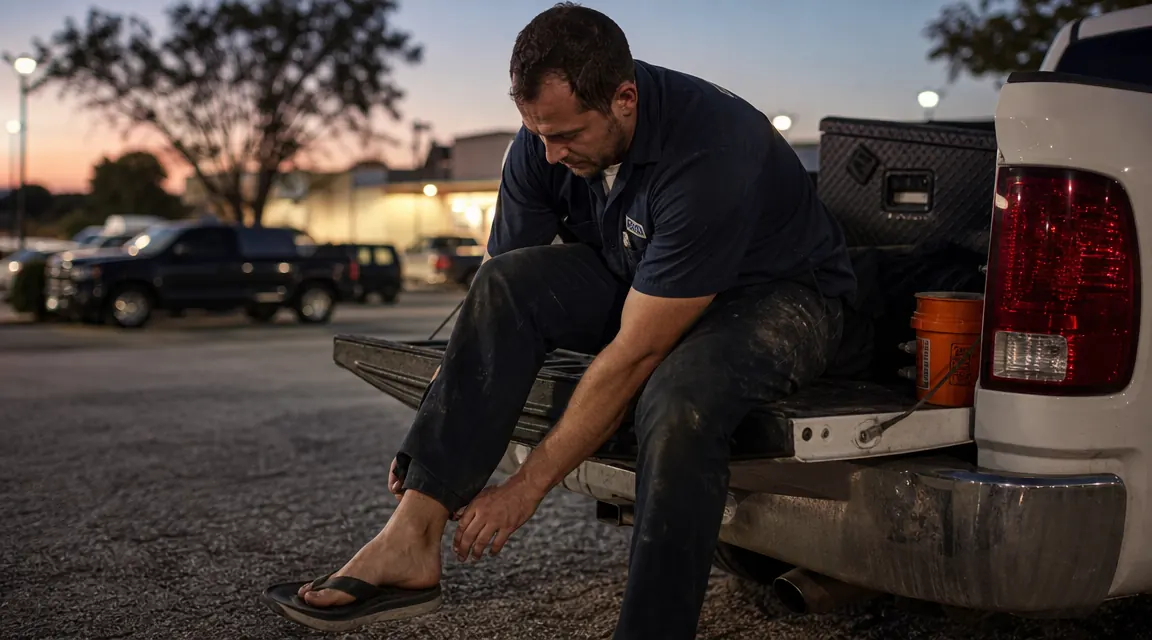
Why does this matter for the audience reading this page? Because people who stand and walk on concrete for eight to twelve hours a day often have swelling in their feet by end of shift. Your foot at 6 a.m. is genuinely smaller than your foot at 6 p.m. If you ordered the correct size for your morning foot, the sandal will already feel snug by the time you actually want to wear it, which is after the shift when your foot has expanded. Ordering up a full size accounts for both the short footbed and the late-day swelling.
One more note on sizing: the width. KuaiLu runs medium to slightly narrow. If your foot is wide or extra-wide, the sides of the footbed will not cup your midfoot, and the arch support ridge will land off-center. That is not just uncomfortable. It actually puts lateral stress on the arch rather than lifting it. I will say this plainly: if you wear a 2E or 4E wide shoe, these are probably not your sandal. Look at Vionic or Oofos wide options instead.
The Toe Post: It Takes About Seven Days to Stop Bothering You
The post that goes between your first and second toe is firm. Not sharp, but firm. If you have been wearing closed-toe shoes for a full work week and you suddenly strap into a flip flop for the first time in months, your skin between those toes is going to let you know about it. The first couple of days, you might last thirty minutes before you take them off. That is normal and it is not a defect.
The break-in window is real but short. Most people report that by day five or six, the post has softened in the right spots and the skin has toughened enough that it stops being a distraction. If you are still getting rubbing and irritation after ten days, there is a small trick that works: rub a tiny bit of petroleum jelly on the post before you put them on for the first three days. Cuts the friction while the break-in happens. After that you will not need it.
One thing worth noting is why KuaiLu went with a firm post rather than a softer rubber one. A firmer post holds the sandal more securely to the foot during walking. Softer posts tend to let the sandal flop around and the heel lift off the footbed with each step, which actually defeats the purpose of the arch support because the foot is not staying in contact with the contour correctly. So the firmness is intentional and functional, even if it costs you a week of break-in.
People with diabetes or neuropathy should be careful here. Any rubbing between the toes that you might not feel clearly is worth monitoring. Check the skin after the first few wears. This is not a KuaiLu-specific concern, it is a flip-flop-with-firm-post concern that applies to the category, but it is worth saying.
The arch ridge that makes this sandal special for plantar fasciitis is the exact same ridge that makes it wrong for flat or low arches. Know which one you have before you order.
The Arch Ridge: Who It Helps and Who It Punishes
The standout feature of the KuaiLu is a fairly pronounced arch contour molded into the yoga-mat-style EVA foam. For someone with moderate to high arches and plantar fasciitis pain, that contour is excellent. It positions the midfoot correctly, takes load off the plantar fascia, and within a week or two of consistent wear after shifts, a lot of people report noticeably less first-step-in-the-morning pain.
But here is what nobody says in the listing: if your arch is flat or low, that ridge does not go where your arch is. It hits your midfoot like a stone. Your plantar fascia is already stressed at a flatter angle, and a high contour sandal pushes against that rather than supporting it. You may actually feel more pain in the midfoot after wearing these than before, not because the sandal is failing but because it was built for a different arch profile.
The easy test: stand barefoot and wet your foot, then step on a piece of cardboard. If the whole foot prints edge to edge with almost no curve on the inside, you have a low or flat arch. KuaiLu is not your sandal. Oofos OOahh or the Vionic Tide are lower-profile options that support flat arches without the aggressive contour. If the print shows a clear curve inward and your arch does not touch the cardboard, KuaiLu will likely feel very good on you.
For the plantar fasciitis crowd with medium or high arches, and this is a significant portion of nurses, warehouse workers, and drivers who stand on hard surfaces all day, the contour does meaningful work. The fascia gets a break from the flat-floor pounding and the heel cup holds the foot steady rather than letting it roll inward or outward. That is the combination that makes a real difference in morning pain over time.
Foam Compression Over Time: What Happens After Three and Six Months
The yoga-mat-style EVA foam KuaiLu uses is good foam. It is not Oofos-grade proprietary OOfoam, but it is meaningfully better than what you get in a drugstore flip flop. Out of the box, the heel area feels firm but not hard, and the arch contour holds its shape without any give. That is the right starting point.
At around three months of daily use, one hour per day after a shift, you will start to notice the heel area has softened and compressed slightly. The arch contour is still there but it is a little less pronounced than it was on day one. For most people this is not a problem. The support is still functional. At six months of daily use, the softening is noticeable. The sandal still feels better than a flat flip flop, but the therapeutic lift the arch contour was providing has diminished by maybe thirty percent.
This is the conversation nobody has in the review section because most people do not wear the same sandal for six months straight and then come back to update their review. But for someone who is going to depend on these for foot recovery every single day, you should plan on replacing them around the six-month mark if you are using them heavily. At the current price point, that is still a reasonable deal compared to custom orthotics.
One sign the foam is getting close to done: the footbed will look slightly compressed in the heel print area, like the foam has molded to your foot shape. That is not bad initially, it actually feels nice, but when the compression reaches a certain point the arch contour loses its lift. That is your signal to replace. Some people run two pairs on rotation, alternating days, which doubles the lifespan of each pair because the foam gets time to partially decompress between wears.
Wide Feet: The Honest Answer
I want to be direct about this because a lot of warehouse workers, trades, and long-haul drivers have wide feet from years on their feet. KuaiLu makes these in a standard width. The footbed platform is generous enough that a D-width foot will likely feel fine. If you are at the E or EE range, the edge of the footbed starts to fall short of your foot width, and you will feel the edge of the platform on the outside of your forefoot when you walk.
If you are a borderline case, a wide D, ordering up a full size as recommended will give you a slightly longer footbed but not a wider one. Width does not change with the size. So if width is genuinely your concern, try before you buy or be prepared for a return. Amazon's return process for these has been straightforward for most buyers.
The Upper Material: Better Than It Looks in the Photos
The upper strap is a PU leather material that photographs a little plasticky but feels decent in hand. It does not have the breaking-in stiffness you get from genuine leather, and it does not crack and peel the way cheap vinyl does after a summer of use. After about four months of regular wear, the strap on most pairs still looks presentable. There is no irritation at the top of the foot for most people because the strap sits flat and does not have any raised seams or buckle hardware that could dig in.
The outsole has a shallow tread pattern that is fine for indoor and paved surfaces. On wet concrete or sloped driveways, take it slow. The traction is adequate for the intended purpose, walking from your vehicle to the couch or around the house, but it is not a hiking sandal and it does not pretend to be. If your post-shift routine involves crossing a wet dock ramp or a greasy garage floor, pair these with some attention to where you step.
What I Liked
- Pronounced arch contour delivers real plantar fasciitis relief for medium-to-high arch types
- Yoga-mat EVA foam has a better feel underfoot than standard cheap flip-flop foam
- Deep heel cup keeps the foot from rolling inward or outward, adds stability
- PU leather upper holds up to daily use without cracking or peeling over months
- Multiple color options so they look decent enough to wear beyond the parking lot
- Price point makes rotating two pairs for daily use an affordable option
Where It Falls Short
- Runs a full size small: order up or you will return them
- Toe post needs a 5-7 day break-in period; first few wears can be uncomfortable
- Arch ridge is wrong for flat or low arches and can cause midfoot pain in that group
- Foam compresses noticeably by six months of heavy daily use; not a lifetime product
- Standard width only: wide and extra-wide feet will feel the platform edge
- Outsole traction is adequate but not strong on wet surfaces
Who This Is For
You work a job that keeps you on your feet or in a seat for eight-plus hours. By the time you get to your vehicle or your front door, your heels are aching and you have the classic plantar fasciitis tightness along the bottom of your foot. Your arches are medium or high, your feet are medium width, and you typically run true-to-size or slightly narrow in regular shoes. You want something better than a drugstore flip flop but you are not ready to spend three figures on Oofos or a custom orthotic. You wear these from the car to the couch or around the house after the shift, not for five-mile walks. That is the exact person KuaiLu built these for, and for that person, they deliver.
Who Should Skip It
Flat-footed or low-arch workers should skip these and look at Oofos or Vionic options. Wide or extra-wide feet will likely not get a comfortable fit from the standard footbed. People with diabetes or reduced foot sensation should be cautious with any firm toe post and monitor skin carefully. Anyone expecting these to last several years of heavy daily wear will be disappointed at the six-month mark when the foam compression becomes noticeable. And if you cannot stand a break-in period on a toe post, there are strap sandals in the recovery category that avoid the between-toe post entirely.
Also worth checking: the companion piece on this site covers recovery sandals versus orthopedic insoles side by side. If you are on the fence about whether a sandal or an insole approach makes more sense for your situation, that comparison lays out the tradeoffs clearly. See the recovery sandals vs orthopedic insoles for workers article. And if you want the long-term use story on these same KuaiLu sandals told from a different angle, the recovery sandals sore feet after shift review covers six months of daily warehouse floor use.
If your arch profile matches and you are ready to size up one full size, these are worth every dollar.
KuaiLu arch support flip flops have earned their 24,000-plus reviews because they actually work for the right foot type. Order the correct size, give the toe post a week, and you will likely wonder why you waited this long.
Amazon Check Today's Price on Amazon →